
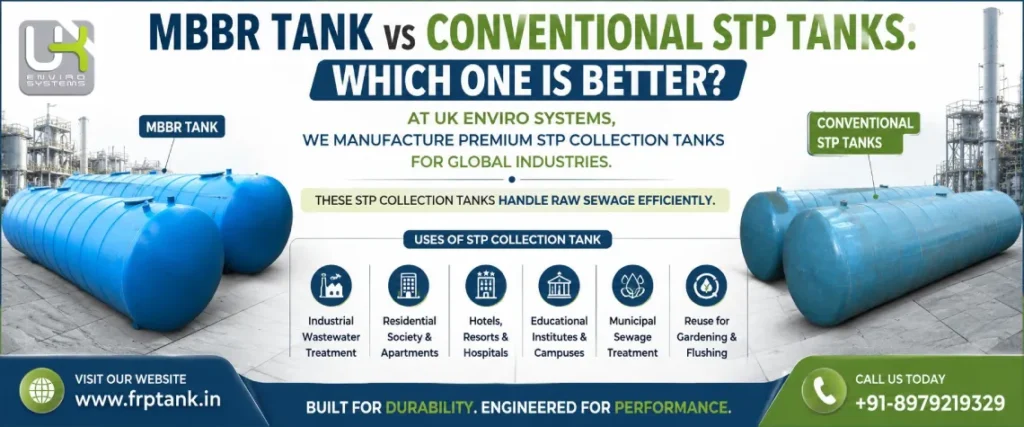
Wastewater treatment shapes modern infrastructure. Industrial and municipal facilities need efficient systems. A STP MBBR Tanks Manufacturer provides innovative biological solutions. Conventional STP tanks have served us for decades. But new technology changes the game. MBBR offers distinct advantages today. We compare both systems technically. This blog guides your decision-making process.
Understanding Conventional STP Tanks
Conventional STP uses activated sludge processes. These tanks rely on suspended biomass. Aeration tanks hold microorganisms in suspension. Clarifiers separate solids from treated water. Return sludge pumps recycle active biomass. This method requires precise control. Operators must manage sludge age carefully. STP Collection Tanks feed raw sewage into the system. Conventional designs need large footprints. Hydraulic retention time remains relatively long.
Key Components of Conventional Systems
Primary clarifiers remove settleable solids. Aeration basins provide oxygen for bacteria. Secondary clarifiers settle biological flocs. Sludge handling systems manage excess biomass. Each component needs individual maintenance. Pumps and blowers consume substantial energy. FRP Storage Tank often stores chemicals for disinfection. Conventional plants also need treated water holding. Treated Water Storage Tank holds final effluent. These tanks are essential for reuse applications.
Technical Limitations of Conventional Tanks
Conventional systems suffer from sludge bulking. Filamentous bacteria cause poor settling. This problem reduces effluent quality. Shock loads upset biological equilibrium. Toxic compounds can kill sensitive organisms. Temperature changes affect nitrification rates. Hydraulic overloads wash out biomass. Consequently, conventional STP performance fluctuates. Operators require extensive training. Chemical addition adds operating costs.
Introducing MBBR Technology
MBBR means Moving Bed Biofilm Reactor. This process uses plastic carriers for biofilm growth. Carriers move freely in the aeration tank. STP MBBR Tanks Manufacturer designs high-density polyethylene carriers. Microorganisms attach to protected surfaces. This biofilm resists washout effectively. Even during hydraulic surges, biomass stays safe. MBBR systems handle shock loads better. The technology suits both municipal and industrial waste.
How MBBR Tanks Function
Carriers occupy 30% to 70% of tank volume. Fine bubble diffusers provide oxygen. Circulation keeps carriers uniformly suspended. Biofilm grows thick on each carrier. Excess biofilm shears off naturally. Sheared solids leave with the effluent. A downstream clarifier captures these solids. MBBR Tank Manufacturer optimizes carrier geometry. Each carrier offers high surface area per volume. Typical specific surface reaches 500 to 1200 m²/m³.
Advantages Over Suspended Growth
Biofilm processes concentrate active biomass. Conventional systems hold 2-4 g/L MLSS. MBBR maintains 10-15 g/L biofilm concentration. This higher biomass improves removal rates. Consequently, MBBR reduces tank size significantly. Footprint shrinks by 40% to 60%. Retrofit projects benefit immensely. Existing tanks can convert to MBBR. FRP Water Storage Tank complements MBBR systems perfectly.
Technical Comparison: MBBR vs Conventional
We evaluate key performance parameters here. Each factor determines overall system viability.
Space and Footprint
Conventional STP requires large aeration basins. Settling tanks add extra area. Sludge digesters occupy more space. MBBR combines aeration and biofilm in one tank. STP MBBR Tanks Manufacturer reduces land requirements. This helps urban projects with limited land. FRP Water Storage Tanks fit easily beside MBBR units. Compact systems save construction costs.
Biomass Retention and Stability
Conventional systems lose biomass during peak flows. MBBR retains biomass on carriers. Carriers remain inside the reactor always. Thus, biological activity stays consistent. Organic removal efficiency exceeds 90% in MBBR. Conventional achieves similar values but less reliably. Nitrification occurs more stably in MBBR. Cold weather affects MBBR less severely. Biofilm protects microbes from temperature drops.
Sludge Production
Conventional activated sludge yields high excess sludge. Disposal costs rise yearly. MBBR produces 20% to 30% less sludge. Longer sludge age reduces biomass yield. This lowers handling and dewatering expenses. STP Collection Tanks feed sewage evenly to MBBR. Lower sludge means fewer tanker trips. This environmental benefit appeals to many.
Energy Consumption
Aeration consumes 60% of STP energy. Conventional systems need high dissolved oxygen. MBBR uses fine bubble diffusers efficiently. Oxygen transfer rates improve with carrier movement. Mixing energy is lower than mechanical aerators. Some MBBR configurations use jet aeration. Overall, MBBR saves 15% to 25% energy. FRP Storage Tank Supplier often recommends MBBR for energy savings.
Maintenance and Operator Involvement
Conventional STP demands daily lab tests. Sludge return rates need constant adjustment. MBBR requires less monitoring. Biofilm self-regulates within boundaries. Carrier fouling is rare with proper design. MBBR Tank Manufacturer provides simple operational guidelines. Maintenance focuses on diffusers and screening. No sludge recycling pumps to worry about. Operators appreciate this simplicity.
Why MBBR Outperforms Conventional Systems
MBBR technology aligns with modern sustainability goals. It handles variable loads without hiccups. Industrial effluents contain hard-to-degrade compounds. Biofilm communities adapt more effectively. STP Water Tank Manufacturer in India promotes MBBR for diverse wastes. Retrofit scenarios show immediate improvements. A municipal plant upgraded to MBBR. Its capacity increased by 50% without new tanks. That is a remarkable achievement.
Resilience to Shock Loads
Chemical spills or high BOD events occur. Conventional systems crash and take days to recover. MBBR biofilm cushions the impact. Carriers retain active biomass inside the reactor. Once normal flow resumes, performance returns quickly. PP FRP Tanks for STP often precede MBBR units. These tanks equalize flow and composition. Together, they form a robust treatment train.
Scalability and Modularity
MBBR systems scale easily with additional carriers. You can add carriers as load increases. Conventional expansion means new concrete basins. Customized Treated Water Tank integrates with modular MBBR. Manufacturers ship pre-assembled carrier modules. Installation takes weeks instead of months. This speed benefits urgent environmental compliance.
Role of STP MBBR Tanks Manufacturer in System Success
Choosing the right manufacturer determines performance. STP MBBR Tanks Manufacturer must offer technical expertise. They should calculate carrier volume accurately. They also need to design proper aeration grids. MBBR Tank Manufacturer provides mixing and screening recommendations. Their experience with biofilm kinetics matters greatly. A good manufacturer conducts pilot studies. They verify design parameters for specific wastewater.
Quality of Carriers
Carriers must have high mechanical strength. They should resist abrasion for 15 years. STP MBBR Tanks Manufacturer uses virgin HDPE. Additives prevent UV degradation. The specific gravity must remain near 0.95. This ensures gentle fluidization. Carrier shape affects mass transfer. Proprietary designs offer better performance.
Integration with Auxiliary Tanks
The treatment plant includes many storage units. FRP Water Storage Tank Manufacturer supplies clearwells. Treated Water Storage Tank holds final effluent for reuse. FRP Storage Tank Supplier offers chemical dosing tanks. STP Collection Tanks receive raw sewage initially. PP FRP Tanks for STP handle aggressive chemicals. All these integrate with the MBBR core. FRP Water Storage Tanks offer corrosion resistance. They are superior to steel in wastewater service.
Cost-Benefit Analysis: MBBR Wins
Initial capital costs differ between systems. Conventional tanks are cheaper to build. But MBBR offsets this with operational savings. Lower energy and sludge reduce annual costs. Payback periods fall within 3 to 5 years. Additionally, land savings reduce civil works. STP Water Tank Manufacturer in India notes competitive MBBR pricing. Scale economies make MBBR affordable for all sizes. Lifecycle costs favor MBBR decisively.
Installation and Retrofit Benefits
Many existing STPs need upgrades. Stringent discharge norms require better nitrogen removal. Conventional retrofitting costs enormous sums. MBBR retrofits simply add carriers and diffusers. The existing tank volume becomes bioactive. This approach saves concrete and steel. Customized Treated Water Tank often accompanies retrofits. The whole project remains cost-effective.
Environmental Impact
Less sludge means lower disposal footprint. Reduced energy cuts carbon emissions. MBBR plants occupy smaller land parcels. This preserves natural habitats. Treated water quality meets reuse standards. Treated Water Storage Tank collects high-quality effluent. Industries can reuse this water for cooling. FRP Water Storage Tank ensures no contamination during storage. Sustainability drives today’s engineering choices.
Case Scenarios Illustrating MBBR Superiority
A textile plant switched to MBBR. Its conventional STP failed on color removal. MBBR biofilm adapted to dyes and auxiliaries. Effluent COD dropped from 600 to 80 mg/L. Similarly, a residential complex expanded. They installed MBBR within the existing footprint. Carriers doubled the treatment capacity. STP MBBR Tanks Manufacturer supplied the whole system. The client saved 30% on electricity bills.
Cold Climate Performance
Conventional nitrifiers cease activity below 10°C. MBBR retains biofilms even at 4°C. Carrier movement creates mixing without thermal stress. Treatment continues throughout winter months. Many European plants choose MBBR for this reason. MBBR Tank Manufacturer designs for local climate conditions. Insulation remains optional due to biofilm robustness.
Industrial High-Strength Waste
Food processing waste has BOD above 5000 mg/L. Conventional systems require huge dilution ratios. MBBR handles high organic loads directly. Biofilm thickness adjusts automatically. PP FRP Tanks for STP buffer pH swings before MBBR. This combination treats cheese whey successfully. The treated water goes to Treated Water Storage Tank. Farmers use it for irrigation safely.
Future-Proofing Your STP with MBBR
Regulations tighten continuously. Nitrogen and phosphorus limits reduce every few years. MBBR easily upgrades to anoxic zones. Anoxic carriers enable denitrification. Conventional systems struggle with retrofitting anoxic selectors. FRP Storage Tank Supplier provides chemical addition for polishing. MBBR plus tertiary filtration meets stringent norms. Customized Treated Water Tank holds water for advanced oxidation if needed. Thus, MBBR adapts to future demands.
Integration with Digital Controls
Modern MBBR uses PLC-based automation. Dissolved oxygen probes adjust blower speed. Carrier movement monitors indicate mixing status. STP MBBR Tanks Manufacturer offers SCADA integration. Operators view real-time performance online. Predictive maintenance alerts prevent failures. This digitization improves overall reliability. Conventional plants lag in such smart features.
Material Compatibility
Wastewater contains sulfides and chlorides. Corrosion attacks steel tanks rapidly. FRP Water Storage Tank and FRP Water Storage Tanks offer excellent corrosion resistance. PP FRP Tanks for STP protect against aggressive constituents. FRP Storage Tank systems last over 25 years. FRP Water Storage Tank Manufacturer ensures proper resin selection. MBBR tanks themselves can be concrete or steel. Internals use stainless steel for longevity.
Conclusion
MBBR beats conventional STP. Saves space, sludge, and energy. Biofilm resists shocks. Partner with UK Enviro Systems, a trusted STP MBBR Tanks Manufacturer. Add FRP Water Storage Tanks and a Customized Treated Water Tank. Upgrade now.
Frequently Asked Questions
Yes, MBBR biofilms support slow-growing nitrifiers effectively. Even at high ammonia levels, the protected biofilm achieves stable nitrification without chemical addition.
Quality HDPE carriers last 15 to 20 years. Replacement is rarely needed if you avoid abrasive solids. A good MBBR Tank Manufacturer provides abrasion-resistant carriers.
Absolutely. MBBR adapts to diverse organic strengths. Industrial units often pair it with PP FRP Tanks for STP to handle pH variations and toxic shocks.
Biofilm survives several hours without oxygen. Restore aeration quickly, and the system recovers within hours, unlike conventional tanks that take days to re-establish biomass.
Retrofitting costs 30-50% less than building new tanks. You simply add carriers and diffusers into existing basins, making it a highly economical upgrade.