
150 KL FRP HCL Storage Tanks
“UK Enviro Systems, a leading 150 KL FRP HCL Storage Tanks Manufacturer, engineers premium FRP storage tanks. Our composite vessels deliver unmatched corrosion resistance and structural integrity. Chemical, water, and pharma industries rely on our durable storage solutions. We combine advanced technology with manufacturing excellence for global clients.”
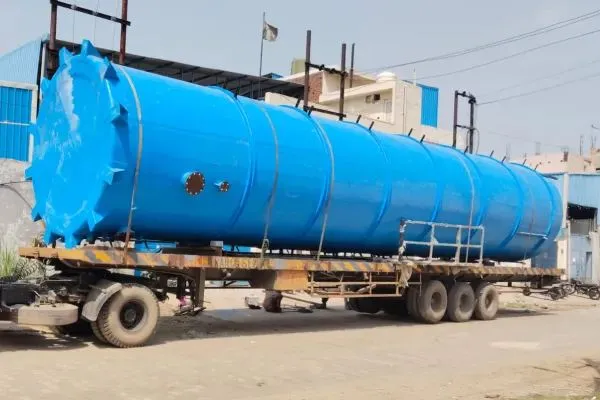
150 KL FRP HCL Storage Tanks – Engineered for Safety and Performance
At UK Enviro Systems, we manufacture premium industrial storage solutions. Our 150 KL FRP HCL Storage Tanks set the industry standard. These tanks store hydrochloric acid safely and efficiently. They serve chemical plants, metal processing units, and water treatment facilities. We design every tank to resist harsh chemicals. Our 150 KL FRP HCL Storage Tanks offer long service life. They require minimal maintenance. This makes them a cost-effective choice for bulk HCL storage.
Why Choose 150 KL FRP HCL Storage Tanks for Hydrochloric Acid?
Hydrochloric acid is highly corrosive. It attacks many common materials. Steel and concrete fail quickly. But FRP (Fiber-Reinforced Plastic) excels. 150 KL FRP HCL Storage Tanks use advanced resin systems. These resins resist HCL at various concentrations. They handle temperatures up to 60°C. Our tanks do not corrode or leak. They keep your chemical safe for years.
Additionally, FRP is lightweight. A 150 KL FRP HCL Storage Tank weighs much less than steel. This reduces foundation costs. It also eases transportation and installation. You save money and time. Moreover, FRP tanks are seamless. They have no welded joints. Welds are weak points in steel tanks. Our tanks eliminate that risk.
Superior Chemical Resistance
We select vinyl ester or epoxy resins. These materials withstand 32% to 35% HCL. They also resist other acids and alkalis. 150 KL FRP HCL Storage Tanks perform well in aggressive environments. They do not degrade or swell. You can store HCL for months without quality loss. Our tanks protect your product purity.
Long Operational Lifespan
A 150 KL FRP HCL Storage Tank lasts over 20 years. UV inhibitors prevent sun damage. The inner liner remains smooth. This prevents crystal buildup. Cleaning becomes easy. You avoid costly replacements. Our tanks offer excellent return on investment.
Technical Specifications of Our 150 KL FRP HCL Storage Tanks
We build each tank with precision. Below are the key technical details:
Capacity: 150 kiloliters (150,000 liters)
Diameter: 3,200 mm to 3,800 mm (customizable)
Height: 5,500 mm to 6,500 mm
Wall Thickness: 12 mm to 25 mm (depends on pressure)
Resin Type: Isophthalic, vinyl ester, or epoxy
Reinforcement: E-glass or C-glass fibers
Liner Thickness: 3 mm minimum (corrosion barrier)
Operating Temperature: -10°C to +60°C
Pressure Rating: Atmospheric to 0.5 bar
Density of FRP: 1,800 kg/m³ (typical)
Flange Standards: ANSI, DIN, or BS
We also provide custom nozzles. Options include manways, vents, drain ports, and level indicators. Each 150 KL FRP HCL Storage Tank gets a full inspection. We test for leaks and structural integrity.
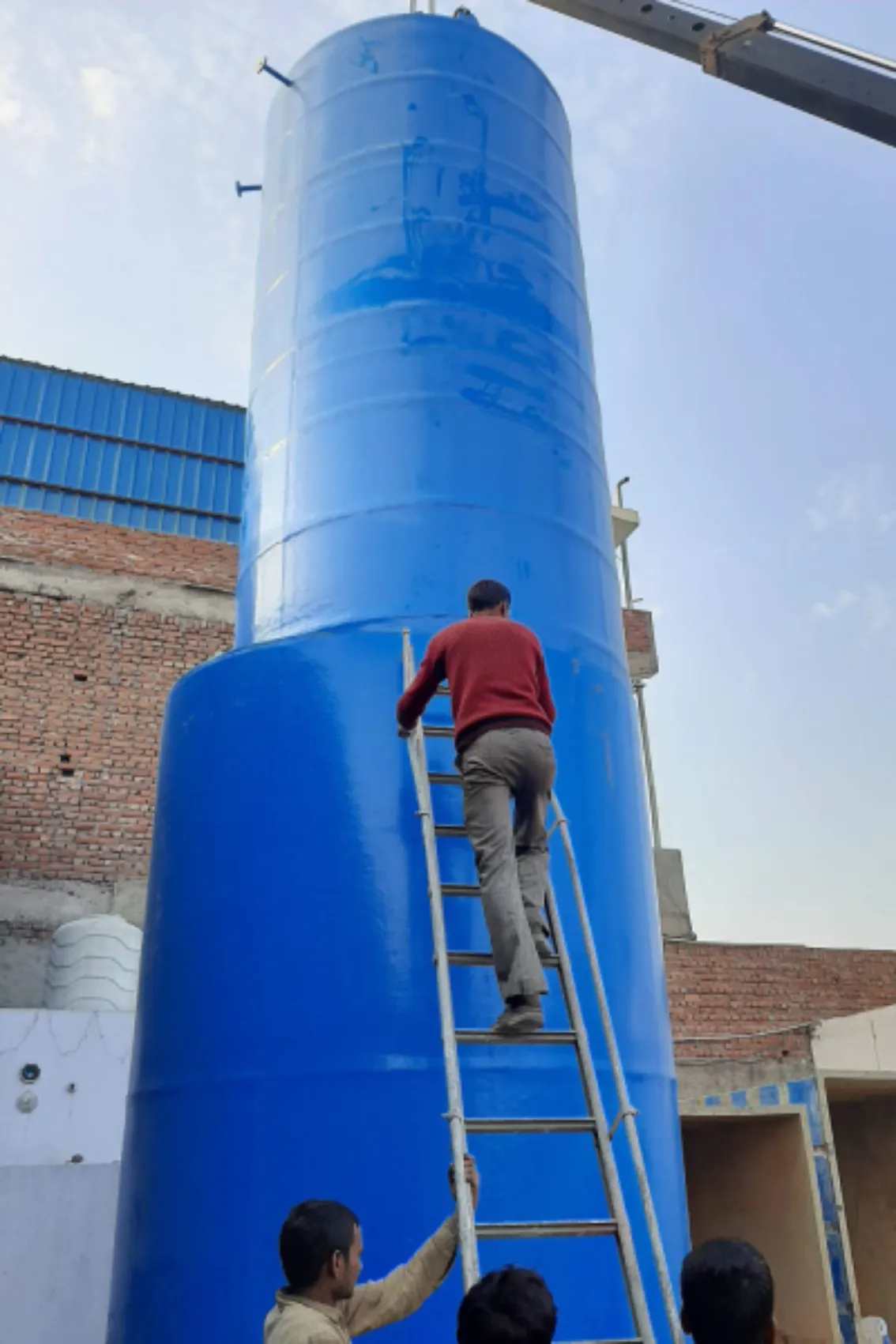
Manufacturing Standards
Our tanks comply with ASTM D3299 and BS 4994. We follow ISO 9001:2015 quality systems. Every tank undergoes hydrostatic testing. We also perform spark testing on the liner. This ensures zero pinholes. You receive a certified product.
Applications of 150 KL HCL Storage Tanks
Industries use our tanks for many purposes. Here are common applications:
Chemical Manufacturing
Chemical plants store HCL as a raw material. A 150 KL HCL Storage Tank feeds reactors continuously. It ensures steady supply. Production never stops due to storage issues.
Metal Pickling
Steel mills use HCL to remove rust. They need large volumes. 150 KL HCL Storage Tanks hold enough acid for pickling lines. Our tanks resist splash and fume attack.
Water Treatment
Municipal plants adjust pH with HCL. A 150 KL FRP HCL Storage Tank stores the chemical safely. It connects to dosing pumps. Operators trust our tanks for 24/7 operation.
Oil and Gas
Drilling fluids require HCL for well stimulation. 150 KL HCL Storage Tanks serve remote sites. Their lightweight design helps logistics. FRP does not spark. This adds safety in hazardous zones.
Advantages Over Other Materials
Many engineers ask: why FRP instead of steel or plastic? Let us compare.
FRP vs. Stainless Steel
Stainless steel corrodes in HCL. Only expensive alloys resist. 150 KL FRP HCL Storage Tanks cost much less. They also weigh 70% less. Installation requires no heavy cranes. Steel tanks need frequent repainting. FRP tanks need none.
FRP vs. Polyethylene
Polyethylene tanks soften at high temperatures. They also have size limits. A 150 KL FRP HCL Storage Tank handles 60°C easily. FRP is stronger. It withstands wind and seismic loads. Polyethylene tanks can bulge or collapse. FRP stays rigid.
FRP vs. Rubber-Lined Steel
Rubber linings peel over time. Once damaged, steel corrodes rapidly. Our 150 KL FRP HCL Storage Tanks have no lining to fail. The entire wall resists corrosion. Repairs are easier too. You can patch FRP on site.
Our Product Details:
Approx. Price: ₹ 14 / Litre ( + GST applicable)
Product Details: 150 KL HCL Storage Tanks
| Capacity | 5KL-200 KL |
| Size( Length X Width X Height) | Customized |
| Minimum Order Quantity | 1 Number |
| Storage Material | Water, Chemicals/Oils, Milk/Dairy |
| Material | PP/FRP/PP FRP |
Approx. Price: ₹ 14 / Litre ( + GST applicable)
Product Details: FRP HCL Storage Tanks
| Capacity | 5 KL to 100 KL |
| Minimum Order Quantity | 1 Piece |
| Size( Length X Width X Height) | Customized |
| Material | PP/ FRP/ PP FRP |
-We have come up as one of the most dependable manufacturers and exporters of FRP HCL Storage Tanks over a period of time.
Approx. Price: ₹ 14 / Litre ( + GST applicable)
Product Details: PP FRP HCL Storage Tanks
| Storage Capacity | 5KL to 500KL |
| Minimum Order Quantity | 1 Piece |
| Material | PP/ FRP/ PP FRP |
| Size( Length X Width X Height) | Customized |
Features: Application specific design Excellent performance Dimensional accuracy
Approx. Price: ₹ 14 / Litre ( + GST applicable)
Product Details: 20KL HCL Storage Tanks
| Storage Capacity | 5KL to 500KL |
| Minimum Order Quantity | 1 Piece |
| Tank Orientation | Vertical |
| Material | PP/ FRP/ PP FRP |
| Size( Length X Width X Height) | Customized |
Features Long service life, Temperature resistance. Accurate dimension
Approx. Price: ₹ 14 / Litre ( + GST applicable)
Product Details: 30KL HCL Storage Tanks
| Storage Capacity | 5KL to 500KL |
| Minimum Order Quantity | 1 Piece |
| Size( Length X Width X Height) | Customized |
| Material | PP/ FRP/ PP FRP |
Features: Excellent corrosion resistance,Excellent weather resistance and Maintenance Free
Approx. Price: ₹ 14 / Litre ( + GST applicable)
Product Details: 50KL HCL Storage Tanks
| Storage Capacity | 5KL to 500KL |
| Minimum Order Quantity | 1 Piece |
| Material | PP/ FRP/ PP FRP |
| Size( Length X Width X Height) | Customized |
Features: Application specific design Excellent performance Dimensional accuracy
Approx. Price: ₹ 14 / Litre ( + GST applicable)
Product Details: 100KL HCL Storage Tanks
| Storage Capacity | 5KL to 500KL |
| Minimum Order Quantity | 1 Piece |
| Material | PP/ FRP/ PP FRP |
| Size( Length X Width X Height) | Customized |
Features: Application specific design Excellent performance Dimensional accuracy
Approx. Price: ₹ 14 / Litre ( + GST applicable)
Product Details: 150KL HCL Storage Tanks
| Storage Capacity | 5KL to 500KL |
| Minimum Order Quantity | 1 Piece |
| Material | PP/ FRP/ PP FRP |
| Size( Length X Width X Height) | Customized |
Features: Application specific design Excellent performance Dimensional accuracy
Approx. Price: ₹ 14 / Litre ( + GST applicable)
Product Details: 200KL FRP HCL Storage Tanks
| Storage Capacity | 5KL to 500KL |
| Minimum Order Quantity | 1 Piece |
| Material | PP/ FRP/ PP FRP |
| Size( Length X Width X Height) | Customized |
Features: Application specific design Excellent performance Dimensional accuracy
Approx. Price: ₹ 14 / Litre ( + GST applicable)
Product Details: Hydrochloric Acid Storage Tanks
| Storage Capacity | 5KL to 500KL |
| Minimum Order Quantity | 1 Piece |
| Material | PP/ FRP/ PP FRP |
| Size( Length X Width X Height) | Customized |
Features: Application specific design Excellent performance Dimensional accuracy
Approx. Price: ₹ 14 / Litre ( + GST applicable)
Product Details: 200 KL HCL Storage Tanks
| Capacity | Up to 200KL |
| Material | FRP |
| Style | Vertical |
Other Details:
1. Supplied with fire retardant and ultra violet resistant additives as per specific requirements.
2. Suitable for using highly corrosive chemicals at maximum temperature up to 150 degree centigrade.
Approx. Price: Rs 2 Lakh / Number
Product Details: 100 KL HCL Storage Tanks
| Capacity | 5KL-200KL |
| Color | Blue |
| Weight | 1-100 t |
Features:
Easy to use
Sturdy construction
Robust in design
Custom HCL Storage Tanks from UK Enviro Systems
Every client has unique needs. We offer Custom HCL Storage Tanks built to your specs. Change the diameter or height. Add heating or cooling coils. Include insulation or external cladding. We design for vertical or horizontal orientation.
Design Options
Vertical Cylindrical: Most common for 150 KL FRP HCL Storage Tanks.
Horizontal Cylindrical: For low-headroom areas.
Rectangular: For space constraints (limited sizes).
We also integrate secondary containment. A double-wall tank prevents spills. Leak detection sensors fit between walls. This meets EPA regulations.
Accessories and Fittings
We supply these add-ons:
Manholes: 600 mm diameter for entry.
Vent Scrubbers: Reduce HCL fumes.
Level Gauges: Magnetic or radar type.
Ladder and Platform: Safe top access.
Overflow Pipe: Prevents overfilling.
Bottom Outlet: Sloped for complete drainage.
Our engineers help you select the right package. Every 150 KL FRP HCL Storage Tank ships with a detailed drawing.
Manufacturing Process – How We Build 150 KL FRP HCL Storage Tanks
We use filament winding and hand lay-up. Here is the step-by-step process:
Step 1: Mold Preparation
We start with a polished steel mandrel. The mandrel matches your tank diameter. We apply release agents. This ensures easy demolding.
Step 2: Liner Application
We spray or brush a corrosion barrier. This layer contains high resin content. It uses C-glass veil. The thickness reaches 3 mm. We check for pinholes with a spark tester.
Step 3: Structural Layer
We wind continuous fiberglass roving over the liner. The roving is saturated with resin. A computer controls the winding angle. This maximizes strength. We add chopped strand mat for extra stiffness.
Step 4: Curing
The tank rotates in a heated oven. Curing takes 4 to 8 hours. Temperature reaches 80°C. This cross-links the resin. The tank becomes rigid and strong.
Step 5: Demolding and Trimming
We pull the tank off the mandrel. Then we cut nozzles openings. Workers attach flanges using secondary bonding. We reinforce all connections.
Step 6: Quality Control
Every 150 KL FRP HCL Storage Tank undergoes:
Visual Inspection: No bubbles or cracks.
Dimensional Check: Matches drawing.
Barcol Hardness Test: Confirms cure.
Hydrostatic Test: Fills with water for 24 hours.
Spark Test: 15,000 volts over liner.
We issue a test certificate with each tank.
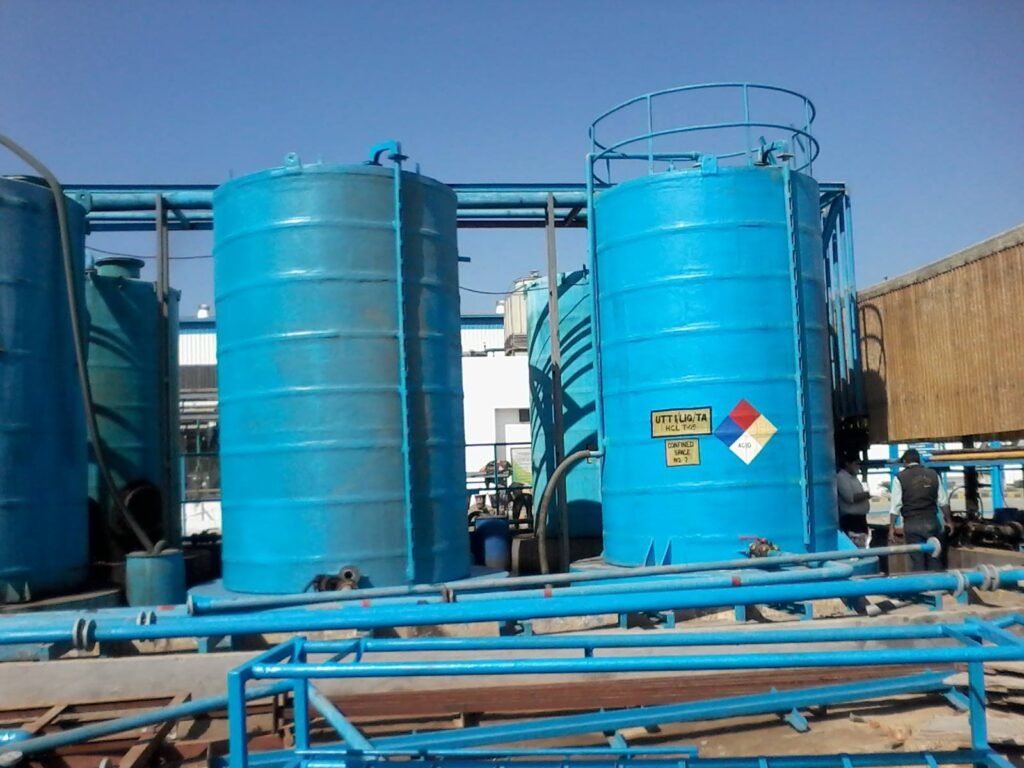
Safety Features of FRP HCL Storage Tanks Manufacturers Design
As leading FRP HCL Storage Tanks Manufacturers, we prioritize safety. Our tanks include:
- Flame Retardant Properties: We add fire-retardant resin. This meets ASTM E84 Class 1. A 150 KL FRP HCL Storage Tank will not support combustion. It protects your facility.
- Anti-Static Capability: HCL movement can generate static. We add conductive carbon filler. This grounds the tank safely. No spark risk exists.
- Leak-Proof Construction: The one-piece design has no seams. Gaskets seal all nozzles. We test every joint. Our 150 KL FRP HCL Storage Tanks have zero leakage.
- Overfill Protection: We install high-level alarms. The alarm connects to your DCS. Operators get early warnings. Spills become impossible.
Installation Guidelines for 150 KL FRP HCL Storage Tanks
Proper installation extends tank life. Follow these steps:
- Foundation Requirements: Prepare a flat concrete pad. The pad must support 30 tons (full tank weight). Use a sand or rubber pad under the tank bottom. This distributes load evenly.
- Handling and Lifting: Use soft slings. Avoid chains or wire ropes. Lift the tank from designated lugs. Do not stress nozzles. Our 150 KL FRP HCL Storage Tanks ship with lifting instructions.
- Piping Connections: Connect with flexible couplings. Rigid pipes can stress the tank. Use expansion joints. Support all pipes independently. This prevents nozzle damage.
- Venting: Install a pressure/vacuum vent. HCL storage requires fume control. Connect the vent to a scrubber. Never seal the tank completely. Thermal expansion creates pressure.
- Grounding: Bond the tank to earth. Use a copper strip. Resistance must stay below 10 ohms. This drains static charges safely.
Maintenance Practices for Long Life
Our tanks need little upkeep. But some checks help:
- Monthly Inspection: Look for surface cracks or blisters. Check flange bolts for tightness. Verify vent operation. Record any changes.
- Annual Inspection: Drain and clean the tank. Inspect the inner liner. Use a mirror and light. Perform a spark test again. Touch up any damaged gel coat.
- Five-Year Major Service: Contact our team for a professional audit. We measure wall thickness. We test resin degradation. A 150 KL FRP HCL Storage Tank often passes with flying colors.
- Repair Procedures: Small cracks need simple patching. Grind the damaged area. Apply fresh resin and glass. Cure with heat lamps. Large repairs need factory assistance. We offer on-site repair services.
Why UK Enviro Systems Is a Trusted FRP HCL Storage Tanks Manufacturer
You need a reliable partner. We deliver excellence. Here is why:
- Decades of Experience: We have made FRP tanks since 1995. Our engineers understand chemical storage. We have supplied 150 KL FRP HCL Storage Tanks to 30 countries.
- In-House Design Team: We do not outsource. Our CAD team creates 3D models. We simulate stress and chemical attack. You get an optimized tank.
- Fast Delivery: Typical lead time is 8 weeks. We stock raw materials. Rush orders take 4 weeks. Our 150 KL FRP HCL Storage Tanks arrive on schedule.
- Competitive Pricing: We buy resin and glass in bulk. Our factory automation reduces labor costs. You pay less than European or US competitors. Quality remains high.
- Global Support: We ship worldwide. Our technicians travel for installation. We provide phone and email support. Spare parts reach you within days.
Case Example: 150 KL FRP HCL Storage Tanks in Action
A metal finishing plant needed four 150 KL FRP HCL Storage Tanks. They stored 32% HCL for pickling. The old steel tanks leaked after 3 years. We delivered vertical tanks with 3,500 mm diameter. Each tank included a vent scrubber and level transmitter. Installation took two weeks. After 5 years, the tanks show no corrosion. The client saved 40% on replacement costs.
Another example: a chemical exporter required 150 KL HCL Storage Tanks for bulk shipping. They needed ISO container compatibility. We built horizontal tanks with stainless steel frames. The tanks passed IMDG certification. Now they ship HCL safely by sea.
Comparing 150 KL vs. 200 Kl HCL Storage Tanks
Sometimes clients ask about larger capacities. 200 Kl HCL Storage Tanks hold 200,000 liters. They need more floor space. Diameter reaches 4,000 mm. Height goes to 7,000 mm. Weight increases by 30%. For most sites, 150 KL FRP HCL Storage Tanks are the optimal choice. They fit standard truck transport. They do not require special permits. Foundation costs stay moderate. But if you need more volume, we build 200 Kl HCL Storage Tanks too. Just contact our sales team.
Environmental and Regulatory Compliance
Our 150 KL FRP HCL Storage Tanks meet global regulations:
CE Marking: For European use.
ASME RTP-1: For USA and Canada.
ATEX: For explosive atmospheres (optional).
ISO 14001: Environmentally responsible manufacturing.
We also provide secondary containment basins. These catch any accidental spill. Our tanks reduce your environmental liability.
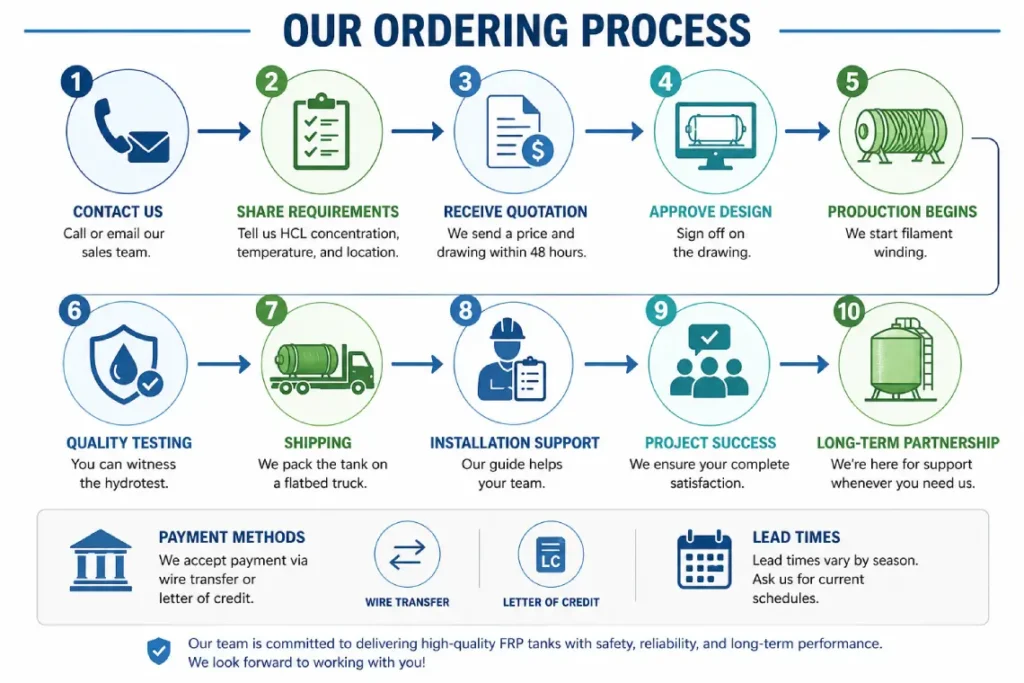
How to Order Your 150 KL FRP HCL Storage Tank
Ordering is simple. Follow these steps:
Contact Us: Call or email our sales team.
Share Requirements: Tell us HCL concentration, temperature, and location.
Receive Quotation: We send a price and drawing within 48 hours.
Approve Design: Sign off on the drawing.
Production Begins: We start filament winding.
Quality Testing: You can witness the hydrotest.
Shipping: We pack the tank on a flatbed truck.
Installation Support: Our guide helps your team.
We accept payment via wire transfer or letter of credit. Lead times vary by season. Ask us for current schedules.
Conclusion – Invest in the Best 150 KL FRP HCL Storage Tanks
Do not risk HCL storage with inferior materials. Choose UK Enviro Systems. Our 150 KL FRP HCL Storage Tanks deliver unmatched chemical resistance. They last two decades or more. We offer custom designs, competitive prices, and fast delivery. As leading FRP HCL Storage Tanks Manufacturers, we stand behind every product.
Contact us today. Request a quote for your 150 KL FRP HCL Storage Tanks. Let us build a safe, durable, and cost-effective solution for your facility. Call +91-8979219329 or email sales@ukenvirosystem.com.com. Protect your chemical storage with the best in the industry.
FAQ: Everything You Need to Know About Storage Tanks
Yes. Our vinyl ester resin system resists 35% HCL up to 80°C. The corrosion barrier prevents degradation.
Installation takes 2 to 3 days. Foundation prep needs one week. Our team provides on-site guidance.
Yes. We offer double-wall tanks or external basins. Leak detection sensors are optional.
We provide a 5-year warranty against manufacturing defects. Liner and structure are fully covered.
Absolutely. We integrate internal or external heating coils. PTFE or carbon steel options available.
