
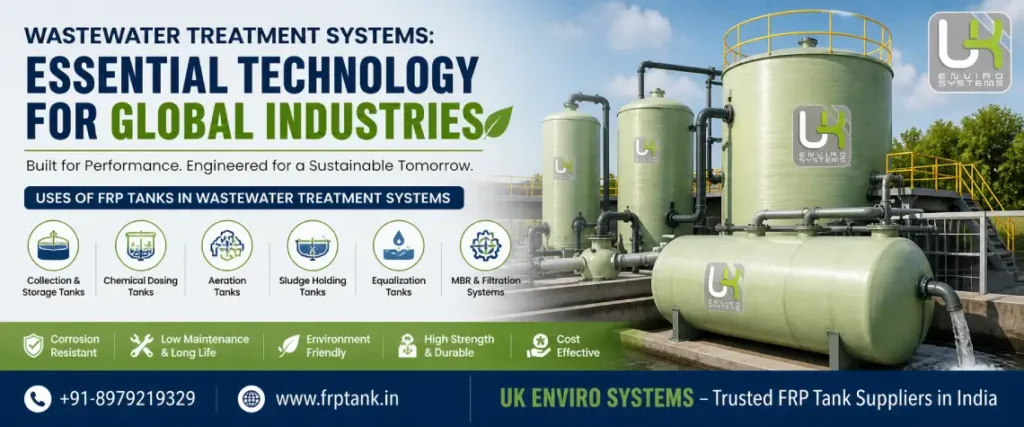
Wastewater Treatment Systems: Essential Technology for Global Industries
Clean water drives modern society. Wastewater Treatment Systems remove pollutants from used water. These systems protect rivers, lakes, and oceans. They also allow water reuse for industrial processes. UK Enviro Systems supplies FRP tanks that support these critical operations. Wastewater Treatment Systems come in many designs. Each design targets specific contaminants. Municipal plants handle large volumes daily. Industrial systems treat chemical-laden effluents. Wastewater Treatment Systems prevent environmental damage. They also recover valuable resources. This blog explores their components, processes, and benefits.
Understanding the Core Functions of Wastewater Treatment Systems
Wastewater Treatment Systems perform several essential tasks. Firstly, they separate solids from liquids. Secondly, they break down organic matter. Thirdly, they remove toxic chemicals. Wastewater Treatment Systems also eliminate pathogens. Finally, they produce clean effluent. Each stage requires specialized equipment. STP Collection Tanks serve as the first stop. These tanks gather incoming waste. They balance flow rates. They also settle heavy particles. STP Collection Tanks prevent overloads downstream.
Primary Treatment: Physical Separation Methods
Primary treatment removes large debris. Bar screens catch sticks and rags. Then grit chambers settle sand and gravel. STP Collection Tanks enable sedimentation. Heavier solids sink to the bottom. Lighter materials float to the top. Scrapers remove settled sludge. Skimmers collect grease and oils. This stage cuts suspended solids by half. It also reduces organic load significantly. Wastewater Treatment Systems rely on this first step. Without primary treatment, later processes fail.
Secondary Treatment: Biological Breakdown
Secondary treatment uses microorganisms. Bacteria consume dissolved organics. They convert waste into carbon dioxide. They also produce more bacteria cells. Wastewater Treatment Systems employ activated sludge processes. Air pumps add oxygen to tanks. STP Collection Tanks feed into aeration basins. Here, microbes thrive and multiply. After aeration, the mixture moves to clarifiers. Settled bacteria return to the aeration tank. Excess bacteria become waste sludge. This biological step removes 85% of organic matter. Wastewater Treatment Systems achieve high efficiency this way.
Tertiary Treatment: Advanced Polishing
Tertiary treatment produces very clean water. Filtration removes fine particles. Sand filters trap remaining solids. Membrane filters block microscopic contaminants. Disinfection kills any pathogens. Chlorine, UV light, or ozone works effectively. Wastewater Treatment Systems may also use nutrient removal. Phosphorus and nitrogen cause algae blooms. Chemical precipitation eliminates phosphorus. Biological nitrification removes ammonia. Denitrification converts nitrates to nitrogen gas. Sewage Treatment Plant Collection Tanks feed into these advanced stages. The final effluent meets strict discharge standards.
The Critical Role of Sewage Treatment Plant Collection Tanks
STP Collection Tanks form the backbone of any facility. They receive raw influent continuously. These tanks equalize flow variations. Peak flows arrive during morning and evening. Dry periods bring very little flow. Sewage Treatment Plant Collection Tanks store excess volume. Then they release it steadily. This balancing protects downstream equipment. Pumps operate efficiently with constant flow. Biological processes also prefer stable conditions. Sewage Treatment Plant Collection Tanks come in multiple configurations.
Types of Collection Tanks
Concrete Collection Tanks
Concrete offers high structural strength. Cast-in-place tanks handle large loads. Precast units provide quick installation. However, concrete corrodes over time. Hydrogen sulfide gas attacks cement. Steel reinforcement rusts and expands. Repairs become costly and difficult.
Steel Collection Tanks
Steel tanks resist impact damage. Welded seams prevent leakage. Coatings protect against corrosion. Epoxy linings work for many years. Nevertheless, steel remains vulnerable to acids. Pinhole defects expose bare metal. Regular inspections catch problems early.
FRP Collection Tanks from UK Enviro Systems
Fiberglass reinforced plastic (FRP) outperforms other materials. FRP resists chemical attack completely. No rust or corrosion occurs. Sewage Treatment Plant Collection Tanks made from FRP last decades. The smooth interior prevents buildup. Cleaning requires minimal effort. Installation proceeds quickly due to light weight. UK Enviro Systems customizes each tank. We match your flow rates and space constraints. Wastewater Treatment Systems benefit from FRP’s reliability.
Design Considerations for Collection Tanks
Capacity determines tank size. Engineers calculate peak hourly flow. They also consider storage time. Two to four hours is typical. Sewage Treatment Plant Collection Tanks need access points. Manholes allow inspection and cleaning. Ventilation removes dangerous gases. Methane and hydrogen sulfide require careful handling. Level sensors automate pump control. Redundant pumps prevent overflows. Wastewater Treatment Systems depend on these design features.
Key Processes Within Wastewater Treatment Systems
Understanding each process helps operators optimize performance. Wastewater Treatment Systems integrate mechanical, biological, and chemical methods. The following sections explain major steps.
Aeration and Oxygenation
Aeration adds dissolved oxygen to water. Microbes need oxygen to break down waste. Wastewater Treatment Systems use diffusers at tank bottoms. Fine bubbles rise through the liquid. Blowers push air through piping systems. Surface aerators mix and oxygenate simultaneously. Sewage Treatment Plant Collection Tanks feed into aeration zones. Proper oxygen levels prevent odors. They also ensure complete treatment. Energy costs represent a major expense. Therefore, modern systems use efficient blowers.
Sedimentation and Clarification
Sedimentation allows particles to settle naturally. Clarifiers are large, circular tanks. Water enters the center and flows outward. Baffles distribute flow evenly. Settled sludge moves to hoppers. Rakes scrape the bottom continuously. Weirs collect clarified water at the surface. Wastewater Treatment Systems use primary and secondary clarifiers. Primary clarifiers handle raw wastewater. Secondary clarifiers process biological mixed liquor. Sewage Treatment Plant Collection Tanks discharge into primary clarifiers. Design parameters include surface overflow rate. Too high a rate carries solids out.
Filtration and Disinfection
Filtration removes remaining suspended solids. Gravity filters use sand and gravel. Pressure filters operate in closed vessels. Membrane filters achieve very fine removal. Microfiltration stops bacteria. Ultrafiltration blocks viruses. Wastewater Treatment Systems then apply disinfection. Chlorine gas remains common and cheap. However, dechlorination protects aquatic life. UV disinfection adds no chemicals. Lamps emit germicidal wavelengths. Ozone generates powerful oxidizing molecules. It decomposes back to oxygen safely. Sewage Treatment Plant Collection Tanks do not participate in this stage. Nevertheless, reliable upstream collection makes filtration possible.
Sludge Handling and Disposal
Sludge accumulates from primary and secondary treatment. Raw sludge contains high water content. Thickening reduces volume. Gravity thickeners concentrate solids from 1% to 6%. Dissolved air flotation works for biological sludge. Then anaerobic digestion stabilizes the material. Bacteria produce methane gas. This biogas fuels generators or boilers. Wastewater Treatment Systems often achieve energy neutrality. Digested sludge becomes dewatered. Centrifuges or belt presses remove water. Finally, dried sludge becomes biosolids. Land application fertilizes crops. Alternatively, incineration destroys all pathogens. Sewage Treatment Plant Collection Tanks collect sludge only temporarily.
Benefits of Modern Wastewater Treatment Systems
Environmental Protection
Untreated wastewater destroys ecosystems. Oxygen depletion kills fish. Nutrients cause algal blooms. Pathogens make water unsafe. Wastewater Treatment Systems prevent these harms. Clean effluent supports aquatic life. Treated water recharges groundwater supplies. Sewage Treatment Plant Collection Tanks capture spills before release. Therefore, communities stay healthier.
Water Reuse and Conservation
Fresh water becomes scarcer each year. Wastewater Treatment Systems enable reuse. Industrial facilities recycle cooling water. Agricultural irrigation uses reclaimed water. Municipalities water parks and golf courses. Direct potable reuse exists in some regions. Advanced treatment produces drinking water quality. Sewage Treatment Plant Collection Tanks start the reuse journey. Every gallon recycled saves a gallon from rivers or aquifers.
Resource Recovery
Modern Wastewater Treatment Systems recover valuable materials. Biogas from sludge heats buildings. Phosphorus from chemical precipitation becomes fertilizer. Cellulose from toilet paper gets recycled. Heat from warm wastewater warms buildings. Sewage Treatment Plant Collection Tanks capture methane safely. Operators convert this gas into revenue.
Industry Applications and Global Standards
Different industries generate different waste streams. Food processors discharge organic wastes. Chemical plants release toxic solvents. Textile mills produce dyes and salts. Wastewater Treatment Systems adapt to each challenge. FRP tanks from UK Enviro Systems withstand aggressive chemistries. Sewage Treatment Plant Collection Tanks handle domestic waste uniformly. Global standards guide design and operation. ISO 14001 certifies environmental management. EU Urban Wastewater Treatment Directive sets limits. US EPA Clean Water Act enforces permits. Asian markets follow similar regulations.
Municipal Applications
Cities generate enormous wastewater volumes. A million-person city produces 400 million liters daily. Wastewater Treatment Systems in municipalities use large infrastructure. Sewage Treatment Plant Collection Tanks receive flow from sewer networks. Lift stations pump waste uphill. Combined sewers handle stormwater too. Separate sewers keep rain out. Treatment plants operate 24/7/365.
Industrial Applications
Factories treat waste before discharge. Oil refineries remove hydrocarbons. Pulp mills handle lignin and chlorinated compounds. Pharmaceutical plants eliminate active ingredients. Wastewater Treatment Systems for industry require pretreatment. Equalization tanks manage variable flows. pH adjustment prevents biological shocks. Sewage Treatment Plant Collection Tanks rarely serve industrial sites. Instead, dedicated collection basins handle process wastes.
Maintaining Efficiency in Wastewater Treatment Systems
Regular maintenance prevents failures. Pumps need seal replacements. Blowers require belt changes. Diffusers clog with biofilms. WWTP Systems depend on monitoring. Dissolved oxygen probes guide aeration rates. Flow meters track incoming loads. Sludge level detectors control wasting. Sewage Treatment Plant Collection Tanks need desludging periodically. Accumulated grit damages pumps. Inspection hatches allow visual checks. UK Enviro Systems designs FRP tanks for easy access. Smooth surfaces resist fouling. Consequently, cleaning takes less time.
Common Operational Challenges
Odor control troubles many plants. Hydrogen sulfide smells like rotten eggs. Wastewater Treatment Plant use biofilters or chemical scrubbers. Sewage Treatment Plant Collection Tanks produce gases during storage. Ventilation systems dilute and remove them. Another challenge involves industrial surges. Toxic discharges kill beneficial bacteria. Holding tanks quarantine suspicious inflows. Equalization prevents shock loads. Energy consumption also challenges budgets. Variable frequency drives on pumps save power. Fine bubble diffusers reduce air requirements.
Best Practices for Operators
Train staff continuously on new methods. Log all data for trend analysis. Calibrate sensors every month. Maintain spare parts inventory. Wastewater Treatment Systems run better with proactive care. Inspect Sewage Treatment Plant Collection Tanks annually for cracks. Repair minor damage immediately. UK Enviro Systems provides technical support. We help optimize your FRP equipment.
Future Trends in Water Reclamation
Technology continues advancing rapidly. Artificial intelligence predicts flow patterns. Machine learning optimizes chemical dosing. Wastewater Treatment Systems become smarter each year. Decentralized treatment gains popularity. Small neighborhood plants reduce pipeline costs. Sewage Treatment Plant Collection Tanks become modular. Containerized systems serve remote communities. Energy-positive facilities generate more power than they use. Nutrient recovery produces valuable fertilizer. Wastewater Treatment Systems transition from cost centers to profit centers. FRP tanks from UK Enviro Systems support this evolution. Our materials resist future chemical demands. We design for adaptability and longevity.
The Role of FRP in Next-Generation Systems
FRP offers unmatched versatility. Molding processes create complex shapes. Custom nozzles and baffles integrate seamlessly. Wastewater Treatment Systems require corrosion resistance everywhere. Sewage Treatment Plant Collection Tanks in FRP handle saltwater intrusion. UV-resistant resins perform outdoors. Fire-retardant grades meet safety codes. UK Enviro Systems leads in FRP innovation. We engineer tanks for 50-year service lives. Choose us for reliable wastewater infrastructure.
Conclusion
Wastewater Treatment Systems protect public health and the environment. They transform contaminated water into reusable resources. STP Collection Tanks start this important process. They balance flows and settle solids. Primary, secondary, and tertiary treatment remove pollutants progressively. Aeration, sedimentation, filtration, and disinfection work together. Industries and municipalities depend on these systems. UK Enviro Systems supplies durable FRP tanks. Our products withstand corrosive wastewater for decades. Contact us to learn more about our solutions. Invest in reliable Wastewater Treatment Systems today. Your community and planet will thank you.