
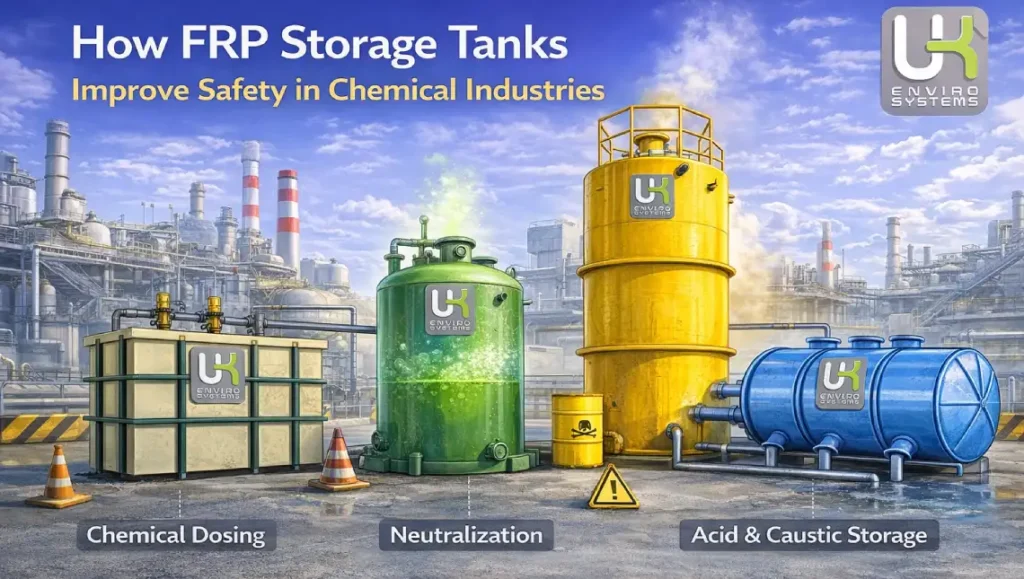
In the high-stakes environment of chemical processing, safety is not merely a regulatory requirement; it is the foundation of sustainable operations. When dealing with volatile, corrosive, and hazardous substances, the integrity of your containment system is paramount. This is where FRP Storage Tanks for Chemical Industries have emerged as a critical solution. Their unique material properties offer a superior alternative to traditional materials, directly addressing the safety challenges that plant managers and safety officers face daily. By mitigating risks associated with corrosion, leaks, and structural failure, these advanced vessels are transforming how facilities manage dangerous liquids.
The Inherent Risks of Chemical Storage
Storing chemicals involves managing significant hazards. Traditional storage tanks made from materials like mild steel or even stainless steel can be vulnerable. These risks include external and internal corrosion, which leads to thinning walls. It also includes the potential for catastrophic brittle fracture under stress. Furthermore, many chemicals are flammable. A static discharge or an electrical fault can have devastating consequences. To mitigate these risks, selecting the right containment vessel is the first and most crucial line of defense.
Why Material Selection is a Safety Decision
Choosing a tank material is fundamentally a safety decision. A material incompatible with the stored substance will eventually fail. This failure can result in dangerous spills, toxic exposure to workers, and environmental contamination. FRP Storage Tanks for Chemical Industries are engineered specifically to resist these aggressive environments. Their composite nature allows manufacturers to tailor the resin system to the exact chemical being stored, ensuring long-term compatibility and peace of mind.
Corrosion Resistance: The Primary Safety Feature
The most significant safety advantage of FRP lies in its exceptional resistance to corrosion. Unlike steel, which rusts and corrodes when exposed to acids and caustics, FRP is inherently inert.
- Elimination of Rust: Steel tanks require expensive linings and coatings to protect them from the contents. If these linings develop pinholes or cracks, corrosion begins unseen. FRP tanks do not rust, eliminating this hidden danger.
- Resistance to Electrochemical Attack: FRP is a non-conductive material. It is immune to galvanic corrosion, which can occur when dissimilar metals are in contact in a chemical environment. This ensures the structural integrity of the tank remains intact for decades.
- Customizable Resin Systems: Leading FRP Storage Tank Manufacturers utilize various resins, such as vinyl ester or polyester, to create a corrosion barrier specifically designed for the chemical it will hold. This customization ensures the tank wall remains unaffected by the stored product, preventing leaks at the source.
Preventing Leaks Through Structural Integrity
A leak in a chemical plant can quickly escalate from a maintenance issue to a major safety incident. FRP tanks are engineered to maintain their structural integrity under conditions that would cause other materials to fail.
The Monolithic Construction Advantage
Many Chemical Storage Tanks made from FRP are manufactured using a filament winding or contact molding process. This creates a monolithic structure—meaning the tank is a single, seamless piece of material. There are no welded seams or joints that can act as weak points. In welded steel tanks, the heat-affected zones of welds are often the first areas to experience corrosion and cracking. FRP eliminates these failure points entirely, providing a continuous barrier against leakage.
Strength-to-Weight Ratio and Stability
Despite being lightweight, FRP offers an incredible strength-to-weight ratio. This means the tanks are robust without placing excessive load on foundations or support structures. A lighter tank reduces the risk of foundation settling or structural overload, which could lead to catastrophic tipping or collapse. This stability is a crucial, often overlooked, aspect of plant safety.
Mitigating Fire and Explosion Hazards
Chemical plants are filled with ignition sources. Safety protocols strictly control sparks, static electricity, and electrical faults. FRP Storage Tanks for Chemical Industries contribute to fire safety in two distinct ways.
Non-Conductive Properties: As mentioned, FRP is an electrical insulator. It does not conduct electricity. This prevents the buildup and discharge of static electricity, a common ignition source for flammable vapors. By using FRP, facilities add a layer of protection against sparks that could ignite volatile atmospheres.
Fire-Retardant Formulations: Safety concerns have driven innovation among PP FRP Storage Tanks Manufacturers. Standard resins can be modified with fire-retardant additives. These tanks are manufactured with a specific grade of resin that inhibits flame spread and reduces smoke generation in the event of a fire. This provides critical extra minutes for emergency response and evacuation.
Durability in Harsh Environments
The external environment of a chemical plant is just as aggressive as the internal contents. Spills, fugitive emissions, and harsh weather can attack the exterior of a storage tank.
Resistance to External Corrosion
Steel tanks often require constant painting and maintenance to protect them from the corrosive atmosphere of a chemical plant. If this maintenance is neglected, the tank exterior can corrode, compromising its structural thickness. FRP tanks, however, are highly resistant to atmospheric corrosion. They do not require external painting to survive in a salty, acidic, or caustic environment. This reduces maintenance needs and ensures the structural integrity designed into the tank is preserved throughout its service life.
Customization for Specific Chemical Challenges
Not all chemicals are the same, and neither are the tanks designed to hold them. Safety is enhanced when the tank is built specifically for its intended use. This is where the expertise of specialized manufacturers becomes invaluable.
The Role of Acid Storage Tank Manufacturers
Storing highly concentrated acids, such as sulfuric or hydrochloric acid, presents extreme challenges. Acid Storage Tank Manufacturers specialize in creating containment solutions that can handle these aggressive fluids safely. They understand the nuances of resin chemistry required to prevent acid attack. By sourcing from specialists who understand these specific dangers, chemical companies ensure they are using equipment that is fit for purpose, rather than a generic solution that might fail prematurely.
Innovations from PP FRP Storage Tanks Manufacturers
Hybrid solutions also play a role in enhancing safety. PP FRP Storage Tanks Manufacturers combine the chemical resistance of polypropylene (PP) with the structural strength of FRP. In these designs, the PP acts as the inner corrosion barrier, providing exceptional resistance to a wide range of chemicals, while the outer FRP layer provides the structural reinforcement. This combination offers a robust safety solution for applications where extreme purity or specific chemical resistance is required, ensuring the primary containment layer remains intact under pressure.
Operational Safety and Maintenance
Safety isn’t just about preventing catastrophic failure; it’s also about the day-to-day interaction personnel have with the equipment.
Reduced Maintenance Interventions
Every time a worker needs to perform maintenance on a steel tank—whether patching a liner, repainting the exterior, or repairing a weld—they are exposed to potential hazards. The high corrosion resistance of FRP drastically reduces the frequency of these interventions. Less maintenance means less worker exposure to hazardous environments and confined spaces, directly improving personnel safety.
Impact Resistance and Durability
While FRP is lightweight, it is also remarkably tough. The material has a certain degree of flexibility, allowing it to absorb impacts that might dent or crack a steel or plastic tank. In a busy industrial environment where forklifts or dropped tools are a reality, this impact resistance prevents minor accidents from turning into major spills.
Conclusion: A Proactive Approach to Process Safety
Investing in high-quality containment is a proactive approach to industrial safety. By choosing FRP Storage Tanks for Chemical Industries, companies are not just buying a vessel; they are investing in risk mitigation. The inherent corrosion resistance eliminates the primary cause of leaks. The non-conductive nature reduces fire hazards. The structural durability ensures long-term integrity with minimal maintenance.
When you partner with experienced FRP Storage Tank Manufacturers, you gain access to engineered solutions that prioritize safety at every stage of design and fabrication. At UK Enviro Systems, our commitment to quality ensures that every tank we deliver helps create a safer, more secure working environment for your most valuable asset—your people.