FRP Tanks in Biogas & Waste-to-Energy Systems
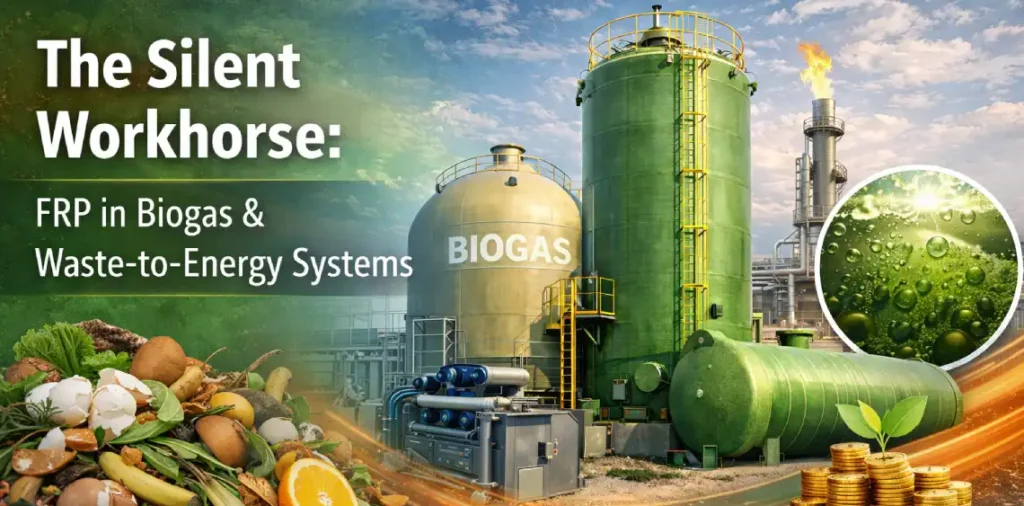
The global push for sustainable energy has turned waste into a valuable resource. Biogas and waste-to-energy systems are leading this green revolution. These systems convert organic matter into renewable power. Their heart is a robust, reliable containment vessel. FRP Biogas Digester Tanks are the silent workhorses of this process. They provide the perfect environment for anaerobic digestion. As a dedicated FRP storage tanks manufacturer, we engineer these critical assets. Our tanks meet the unique demands of renewable energy production. This blog explores the indispensable role of FRP in these transformative systems.
The Anaerobic Digestion Process and Its Demands
Anaerobic digestion is a natural biological process. Microorganisms break down organic material without oxygen. This action occurs inside a sealed digester tank. The process produces biogas and digestate. Biogas is primarily methane and carbon dioxide. Digestate is a nutrient-rich fertilizer. However, the process environment is highly aggressive. It creates unique challenges for construction materials.
The mixture inside is often acidic and corrosive. It can include volatile fatty acids and hydrogen sulfide. Furthermore, the process generates constant mechanical stress. Substrate is pumped in and agitated regularly. Temperature fluctuations are also common. Materials must withstand these combined attacks. Traditional materials like steel often fail here. They corrode quickly and require constant maintenance. Consequently, system reliability and safety suffer. This is where FRP offers a superior solution.
Why FRP is the Optimal Choice for Digesters
Fiber Reinforced Plastic (FRP) possesses an ideal property profile. It aligns perfectly with the needs of anaerobic digestion. Therefore, it has become the material of choice globally.
Unmatched Corrosion Resistance
FRP does not rust or corrode like metals. It resists the acidic brew inside a digester perfectly. This inertness is crucial for long-term structural integrity. Acid Storage Tank Manufacturers understand this chemistry. The same principles apply to biogas systems. FRP handles hydrogen sulfide and fatty acids effortlessly. Its smooth interior surface also prevents scaling. This ensures consistent tank performance for decades.
Superior Strength and Durability
FRP offers an exceptional strength-to-weight ratio. It is incredibly robust yet relatively lightweight. This durability withstands internal pressures and mechanical agitation. The material also resists environmental stress cracking. It performs consistently in varying weather conditions. Consequently, FRP digesters have very long service lives. They require minimal structural maintenance over time.
Design Flexibility and Customization
Every biogas project has specific site requirements. FRP fabrication allows for complete design flexibility. Tanks can be engineered for above-ground or below-ground installation. We can customize dimensions, fittings, and access points easily. As an Industrial Storage Tank Manufacturers, we tailor each unit. This ensures a perfect fit for the project’s footprint and process flow.
Key Applications of FRP in Waste-to-Energy Systems
FRP tanks play multiple critical roles beyond the primary digester. They form an integrated containment ecosystem for the entire plant.
Primary and Secondary Digesters
The main FRP biogas digester tanks are where magic happens. They are designed for optimal retention time and gas yield. FRP’s thermal insulation properties aid in temperature control. This is vital for maintaining efficient microbial activity. Consistent temperature leads to higher biogas production.
Biogas Storage and Scrubber Units
Produced biogas must be stored and cleaned before use. FRP is excellent for low-pressure biogas holders. It is also ideal for scrubber units that remove impurities. For instance, hydrogen sulfide scrubbers often use FRP. The material resists the corrosive media used in cleaning processes.
Digestate and Feedstock Storage
The system also handles input and output materials. FRP tanks store incoming organic feedstock like silage. They also hold the outgoing liquid and solid digestate. Again, corrosion resistance is key here. The nutrient-rich digestate can be corrosive over time. FRP ensures these storage tanks remain secure and leak-free.
The Manufacturing Edge: Engineering for Excellence
Not all FRP tanks are created equal. Their performance hinges on expert design and fabrication. A specialized FRP storage tanks manufacturer brings essential expertise.
Advanced Resin Formulations
The choice of resin matrix determines chemical resistance. We select premium isophthalic, vinyl ester, or epoxy resins. These resins are chosen based on the specific feedstock. This scientific approach guarantees long-term tank integrity. It is a core competence from acid storage tanks manufacturers.
Structural Design and Engineering
Digesters face complex loads. These include hydrostatic pressure, live loads, and wind forces. Our engineering team uses sophisticated software for analysis. We design for all structural and operational stresses. This includes integrating robust piping manifolds and access points. Safety and functionality are engineered into every detail.
Quality Control and Impermeability
A digester must be completely impermeable. It must contain gases and liquids without any loss. We implement a rigorous multi-stage quality control process. This includes meticulous layer-by-layer inspection during winding. Finally, every tank undergoes stringent leak testing. We ensure the vessel is perfect before it leaves our facility.
Integration with Smart Monitoring Technologies
Modern biogas plants are increasingly intelligent. Smart sensors can be integrated directly into FRP tanks. These sensors monitor critical parameters in real time. They track internal temperature, pH levels, and gas composition. This data optimizes the digestion process for maximum yield. It also enables predictive maintenance of the tank itself. This synergy creates a truly smart, efficient energy asset.
Contributing to a Circular and Sustainable Economy
The role of FRP tanks extends beyond simple containment. They enable the very principle of a circular economy. Waste transforms into valuable energy and fertilizer. FRP’s durability and longevity support this sustainable model. The tanks themselves have a long lifespan with minimal upkeep. At end-of-life, FRP materials can also be recycled. This further reduces the environmental footprint of the energy produced.
Conclusion: Building the Foundation for Green Energy
Biogas and waste-to-energy systems represent our sustainable future. They reduce waste, cut greenhouse gases, and produce renewable power. FRP biogas digester tanks provide the reliable foundation for this technology. Their corrosion resistance, strength, and longevity are unmatched. As a leading FRP Storage Tank Manufacturers, UK Enviro Systems is proud to contribute. We build the silent workhorses that power the green revolution. Our expertise ensures your project stands on a foundation of excellence. Choose FRP for a durable, efficient, and sustainable energy solution. Let’s work together to turn waste into worth.