
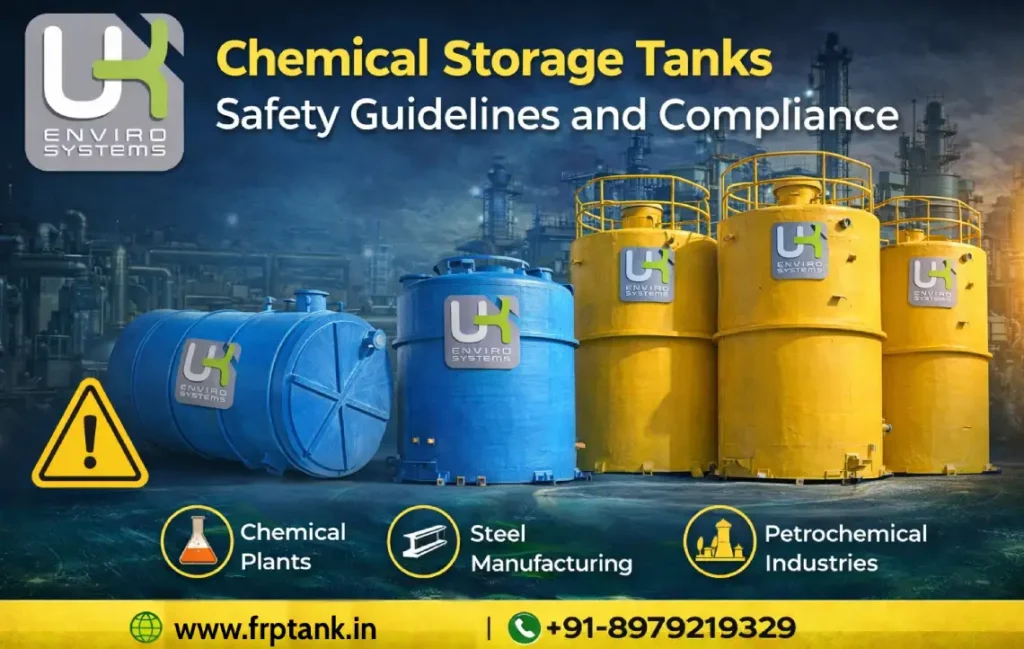
Storing hazardous chemicals requires strict safety measures. Chemical Storage Tanks Safety Guidelines protect workers and the environment. Industries must follow these rules to prevent accidents. UK Enviro Systems provides high-quality FRP tanks worldwide. This blog explains essential safety practices and compliance requirements.
Understanding Chemical Storage Tanks Safety Guidelines
Safety begins with proper tank selection. Different chemicals need different materials. Chemical Storage Tanks Safety Guidelines cover design, installation, and maintenance. These rules apply to all industrial settings. Failure to comply leads to leaks or explosions. Therefore, every facility must adopt these standards.
Why Compliance Matters in Industrial Settings
Compliance reduces risks significantly. Regulatory bodies enforce strict codes. Non-compliance results in heavy fines. Moreover, accidents cause environmental damage. Chemical Storage Tanks Safety Guidelines align with OSHA and EPA rules. Following these guidelines saves lives. It also protects company reputation.
Key Elements of Safe Chemical Storage
Firstly, identify the chemical properties. Acidity, flammability, and reactivity matter. Secondly, choose compatible tank materials. Thirdly, install secondary containment systems. Finally, label all tanks clearly. These steps form the foundation of safety.
Key Safety Measures for FRP Chemical Storage Tanks
FRP Chemical Storage Tanks offer excellent corrosion resistance. Fiberglass reinforced plastic handles aggressive substances well. However, proper handling remains crucial. These tanks require specific safety protocols.
Material Selection and Durability
FRP tanks resist rust and chemical attack. They last longer than steel tanks. Nevertheless, UV exposure degrades FRP over time. Therefore, apply protective coatings outdoors. Also check for cracks during inspections. FRP Chemical Storage Tanks perform best when installed correctly.
Installation Best Practices
Place tanks on stable foundations. Use anchors to prevent movement. Ensure proper ventilation around tanks. Avoid sharp objects near the tank surface. Additionally, leave space for maintenance access. These practices extend tank life significantly.
Corrosion Resistance for Harsh Environments
Acids and bases corrode many materials. FRP stands up to these challenges. Yet, verify chemical compatibility before use. Some solvents attack FRP resins. Consequently, consult manufacturers for guidance. FRP Chemical Storage Tanks suit most industrial acids.
Temperature Considerations
High temperatures weaken FRP structures. Keep tanks away from heat sources. Install temperature monitoring devices. If temperatures exceed limits, consider cooling systems. Similarly, freezing conditions require insulation. Protect tanks from extreme weather.
Best Practices for Industrial Acid Storage Tanks
Industrial Acid Storage Tanks demand extra care. Acids like sulfuric or hydrochloric are dangerous. They cause severe burns and toxic fumes. Therefore, safety guidelines become even more critical.
Handling Acidic Substances Safely
Always use acid-resistant materials. FRP tanks work well for this purpose. However, double-check resin formulations. Some resins fail against strong oxidizers. Additionally, install spill trays beneath tanks. Train workers on acid handling procedures.
Venting and Pressure Control
Acids often release hydrogen gas. This gas builds pressure inside tanks. Consequently, install pressure relief valves. Vent tanks to safe outdoor locations. Never seal acid tanks completely. Proper venting prevents explosions.
Secondary Containment for Acid Tanks
Build dikes or basins around tanks. These structures hold leaks effectively. The containment area should hold 110% of tank volume. Line the area with acid-proof materials. Regularly inspect containment for cracks. This measure prevents soil and water contamination.
Emergency Shower and Eyewash Stations
Place emergency equipment near acid tanks. Workers need immediate access. Test showers and eyewash stations weekly. Keep paths clear of obstacles. Furthermore, post emergency instructions nearby. Quick response reduces injury severity.
Choosing Reliable FRP Storage Tank Manufacturers in Ghaziabad
Quality manufacturing ensures safety. FRP Storage Tank Manufacturers in Ghaziabad produce durable tanks. These manufacturers follow international standards. UK Enviro Systems partners with trusted suppliers. Consequently, clients receive reliable products.
Quality Assurance and Certifications
Look for ISO certified manufacturers. Certifications prove quality control. Additionally, check for ASTM compliance. Reputable manufacturers test every tank. They verify strength and chemical resistance. FRP Storage Tank Manufacturers in Ghaziabad often exceed basic requirements.
Customization Options for Specific Needs
Each chemical storage application differs. Therefore, custom tanks offer better safety. Manufacturers adjust resin types and thickness. They add fittings, ladders, or manways. Customization ensures perfect fit for your facility. Always discuss your chemical properties with engineers.
Inspection Before Delivery
Never skip pre-delivery inspections. Check for surface defects or bubbles. Verify all fittings are secure. Request hydrostatic testing reports. These tests confirm leak-free performance. FRP Storage Tank Manufacturers in Ghaziabad provide such services routinely.
Shipping and Handling Precautions
Transporting FRP tanks requires care. Use padded supports during shipping. Avoid dropping or dragging tanks. Inspect upon arrival for damage. Document any issues immediately. Proper handling preserves tank integrity.
Regular Inspection and Maintenance Protocols
Routine checks prevent failures. Schedule inspections monthly or quarterly. Focus on high-risk areas. Chemical Storage Tanks Safety Guidelines recommend documented inspection logs.
Leak Detection Systems
Install electronic leak detectors. These devices alert operators instantly. Alternatively, use visual inspection methods. Check for wet spots or drips. Also monitor tank weight changes. Early detection minimizes hazards.
Visual Inspection Checklist
Examine tank exterior for cracks. Look for discoloration or blisters. Check all gaskets and seals. Ensure bolts are tight. Inspect support structures for rust. Finally, verify labels remain readable.
Spill Containment Strategies
Prepare for worst-case scenarios. Keep spill kits nearby. Train workers on spill response. Absorbent materials neutralize acid spills. Never wash spills into drains. Instead, contain and dispose properly.
Scheduled Maintenance Activities
Drain and clean tanks periodically. Remove accumulated sludge. Replace worn gaskets every two years. Reapply protective coatings as needed. Document all maintenance actions. Consistent upkeep extends tank lifespan.
Training and Emergency Response
Human error causes many accidents. Therefore, train all employees thoroughly. Chemical Storage Tanks Safety Guidelines emphasize ongoing education.
Employee Safety Drills
Conduct drills every six months. Simulate leaks or spills. Time response and evacuation. Identify weaknesses in procedures. After each drill, review performance. Improve training based on findings.
Proper Labeling and Signage
Every tank must display contents clearly. Use hazard communication labels. Include chemical name and risks. Post warning signs around storage areas. Additionally, mark emergency shut-off valves. Clear labeling prevents mistakes.
Personal Protective Equipment (PPE)
Require appropriate PPE for handlers. Acid-resistant gloves and aprons are essential. Use face shields and goggles. Provide respiratory protection if fumes exist. Inspect PPE before each use. Replace damaged gear immediately.
First Aid and Medical Response
Post first aid instructions near tanks. Train designated first responders. Keep antidotes or neutralizing agents available. Establish relationships with local hospitals. Quick medical response saves lives.
Environmental Compliance and Reporting
Spills affect soil and water. Authorities require incident reporting. Chemical Storage Tanks Safety Guidelines include environmental rules.
Waste Disposal Regulations
Never dump chemicals into drains. Use licensed waste disposal services. Neutralize acids before disposal. Keep records of waste shipments. Comply with local environmental laws.
Groundwater Protection Measures
Install liners under tank areas. Monitor groundwater wells regularly. Detect leaks before they spread. Report any contamination immediately. Prevention is cheaper than cleanup.
Documentation and Record Keeping
Maintain all safety records for five years. Include inspection reports and maintenance logs. Document training attendance. Store records in accessible locations. Auditors will request these files.
Technological Advancements in Tank Safety
Modern technology improves safety. Remote monitoring systems track tank conditions. Sensors measure temperature, pressure, and level. Alerts send data to smartphones. Consequently, operators respond faster.
Automated Shut-Off Valves
Install valves that close automatically. These devices activate during pressure spikes. They also respond to leak detection. Automation reduces human error. Furthermore, it protects overnight operations.
Inventory Management Systems
Digital scales track chemical volumes. Systems calculate usage rates. They predict when refills are needed. Overfill prevention becomes easier. Consequently, spills from overfilling decrease.
Future Trends in Chemical Storage
Smart tanks with self-diagnostics are emerging. These tanks report their own health. Predictive maintenance replaces scheduled checks. FRP manufacturers adopt these innovations. FRP Storage Tank Manufacturers in Ghaziabad lead in this area.
Conclusion
Safety remains everyone’s responsibility. Chemical Storage Tanks Safety Guidelines provide a clear roadmap. Following these rules prevents disasters. FRP Chemical Storage Tanks offer reliable solutions for harsh chemicals. Industrial Acid Storage Tanks need extra precautions. Choose trusted FRP Storage Tank Manufacturers in Ghaziabad for quality products. UK Enviro Systems supports your safety journey. Implement these guidelines today. Protect your workers and the environment. Compliance is not optional; it is essential.