
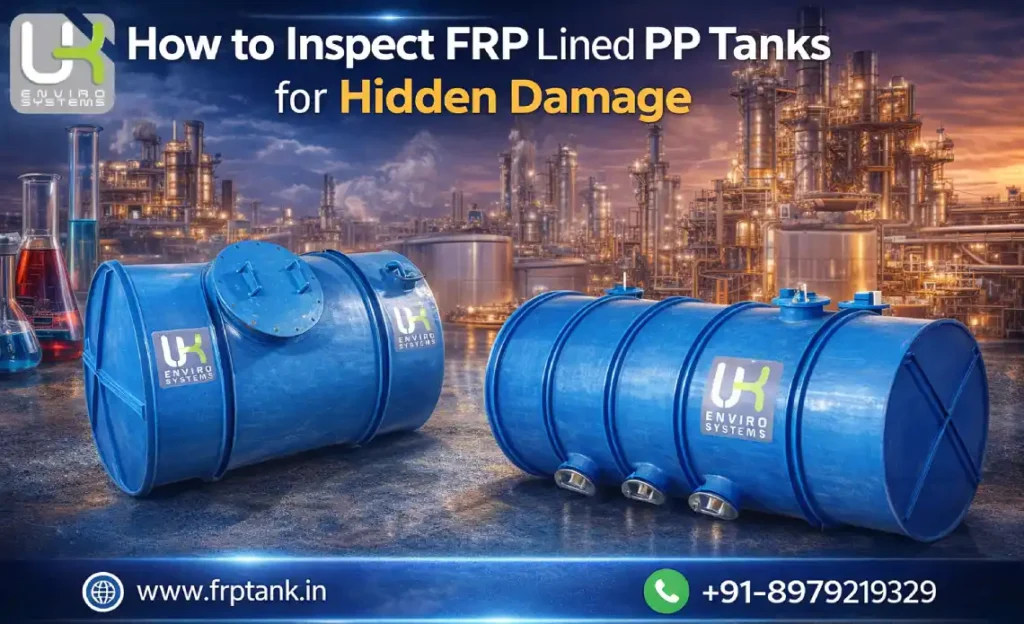
FRP Lined PP Tanks serve as critical assets in modern industry. They hold corrosive chemicals without failing. But hidden damage can develop over time. You cannot always see this damage. A small crack or void may grow. That growth leads to leaks or ruptures. Regular inspection protects your investment. This guide explains how to check FRP Lined PP Tanks thoroughly. You will learn to spot subtle defects. These methods apply to Chemical Storage Tanks of all sizes. They also work for Acid Storage Tanks in harsh environments. Let us begin with why hidden damage matters.
Why Hidden Damage Threatens Your Operations
Hidden damage reduces tank strength. It also compromises chemical resistance. FRP Lined PP Tanks have two layers. The polypropylene (PP) inner layer resists acids. The FRP outer layer provides structural support. Damage can occur between these layers. You may not see it from outside. A small delamination grows slowly. Eventually, the tank wall weakens. Industrial Storage Solutions depend on intact linings. A single failure stops production. It also risks worker safety. Therefore, proactive inspection is essential. Do not wait for visible signs.
Visual Inspection Basics for FRP Lined PP Tanks
Start with a clean tank surface. Remove all dirt and residue. Use mild soap and water. Dry the tank completely. Then examine the exterior. Look for discoloration or stains. White patches may indicate moisture ingress. Dark spots suggest chemical attack. Pay attention to joints and seams. These areas fail first. Use a bright flashlight. Shine it at a low angle. This technique reveals surface irregularities. FRP Lined PP Tanks often hide cracks in shadowed areas. Mark any suspicious zone with chalk. Proceed to closer inspection next.
Tools You Need for Proper Inspection
Gather these tools before starting. A good flashlight is mandatory. Add a magnifying glass or borescope. A thickness gauge helps measure wall loss. Include a rubber mallet for tap testing. Have a mirror on a stick for tight spaces. Keep a notebook and camera. Record all findings immediately. These tools make hidden damage visible. Without them, you might miss critical defects. Chemical Storage Tanks deserve this level of care. Invest in proper equipment once.
Checking Surface Cracks on PP Liners
The PP liner resists many chemicals. But it can crack under stress. Stress comes from temperature changes. It also comes from pressure cycles. Cracks start small. They often appear near fittings. Look at nozzles and manways first. Use your magnifying glass. Scan slowly in a grid pattern. Cracks look like fine lines. They may have white edges. Run your fingernail across suspect areas. A crack catches your nail. Do this gently to avoid damage. FRP Lined PP Tanks with hairline cracks need repair soon. Small cracks grow into large failures.
Stress Cracking Versus Surface Scratching
Scratches are superficial. They do not penetrate deep. Stress cracks go through the liner. How do you tell the difference? Apply a dye penetrant test. This is a simple method. Spray a developer on the surface. Wait five minutes. Wipe away excess. Cracks retain the dye. Scratches do not. Another test uses a magnifying lens. Look for branching patterns. Cracks often branch like tree roots. Scratches run straight. Document all crack locations. Measure their length and width. Acid Storage Tanks experience more stress cracking. Check them monthly if acid concentration is high.
Detecting Delamination Between Layers
Delamination is a hidden killer. It separates the PP liner from FRP shell. You cannot see it directly. But you can hear it. Use the tap test. Tap the tank surface with a rubber mallet. Listen to the sound. A solid bond gives a sharp ring. A delaminated area gives a dull thud. Mark dull spots with chalk. Map them on paper. Large delaminated zones need immediate attention. Small ones can be monitored. However, do not ignore any. Delamination allows liquid to seep behind the liner. That liquid corrodes the FRP. Industrial Storage Solutions must prevent this pathway.
Ultrasonic Testing for Deeper Accuracy
Tap testing has limits. It only finds larger voids. Ultrasonic testing finds smaller defects. This method uses sound waves. A probe sends waves into the tank. Waves bounce back from boundaries. A delaminated area changes the return signal. You need training for this test. Many PP FRP Storage Tank Manufacturers offer inspection services. They use calibrated equipment. Ultrasonic testing also measures wall thickness. Compare readings to original specs. A 10% reduction warns of erosion. A 20% reduction requires repair. Schedule this test annually for critical FRP Lined PP Tanks.
Testing for Chemical Attack and Permeation
Chemicals can attack the PP liner slowly. Permeation happens when molecules pass through. The liner swells or softens. You might not see swelling at first. Use a durometer to check hardness. A soft liner indicates chemical damage. Press the durometer against the surface. Record the reading. Compare to a new sample. A 15 point drop means trouble. Another sign is odor. Smell the tank interior after cleaning. A chemical smell suggests permeation. Chemical Storage Tanks holding solvents need this test frequently. Also check for blistering. Blisters are raised bubbles on the liner. They contain trapped vapor. Puncture a blister with a needle. If liquid comes out, the liner failed.
Permeation Weight Loss Measurement
Weigh a sample coupon if possible. Install coupons during tank fabrication. Remove them yearly. Measure weight change. A loss of 1% or more indicates permeation. This method is very accurate. Without coupons, use a moisture meter. Special meters exist for plastics. Place the probe on the liner. High moisture readings suggest permeation. Acid Storage Tanks with hydrochloric acid show this effect. Change the liner if permeation spreads. Do not wait for visible damage.
Leak and Pressure Testing Procedures
Leaks are obvious when they happen. But small leaks hide. Use a vacuum box test for seams. This test applies suction to a small area. Soap solution bubbles at leak points. Perform this on all welded joints. Another method is the spark test. This works for conductive liners. FRP Lined PP Tanks with carbon filler conduct electricity. Apply a high-voltage spark. Leaks create a visible arc. Follow safety rules for spark testing. Never test near flammable vapors. Pressure testing fills the tank with air. Pressurize to 5 psi maximum. Monitor pressure drop over one hour. A drop of 2 psi indicates a leak. Use soap solution to find the exact spot.
Hydrostatic Testing for Large Tanks
Water is safer than air for pressure tests. Fill the FRP Lined PP Tanks completely. Add a colored dye to the water. Pressurize to 1.5 times working pressure. Hold for two hours. Look for wet spots outside. The dye makes leaks visible. Drain and dry the tank afterward. Hydrostatic testing also reveals bulges. A bulge means structural weakness. Measure any deformation. Compare to original drawings. Industrial Storage Solutions often require annual hydro tests. Check local regulations for frequency.
Thermal and UV Damage Assessment
Heat damages PP liners. The material softens above 80°C. Check for warping near hot inputs. Use an infrared thermometer. Scan the entire tank surface. Hot spots above 70°C are dangerous. They cause liner creep. Creep makes the liner sag. Look for ripples or waves on the liner. These indicate thermal damage. UV light degrades FRP shells. The shell becomes chalky. Rub the surface with a dark cloth. White powder on the cloth means UV damage. Apply a UV protectant coating. Chemical Storage Tanks outdoors need this protection. Replace severely chalked tanks.
Thermal Imaging for Hidden Hot Zones
Thermal cameras show temperature variations. Rent one for a full inspection. Scan the tank during operation. Look for unexpected hot areas. A hot zone may mean internal friction. It could also mean exothermic chemical reaction. Both damage FRP Lined PP Tanks. Compare thermal images over time. New hot zones demand investigation. This method finds problems before failure. It is non-destructive and fast. Train your staff to use thermal cameras. The investment pays off quickly.
Documenting Findings for Maintenance Records
Write down every inspection result. Use a standard form. Include date and inspector name. Photograph all defects. Add measurements and locations. Create a map of the tank. Mark each defect on the map. Track changes over time. A growing crack needs repair. A stable crack can be monitored. Good records help you decide when to replace. They also satisfy safety audits. Share records with PP FRP Storage Tank Manufacturers. They can advise on repairs. Keep records for the tank’s entire life. Digital records are best. Backup them offline too.
Creating a Scoring System for Damage
Assign scores to different defect types. For example, surface cracks score 1 to 5. Delamination scores 1 to 10. Permeation scores 1 to 8. Total the scores after each inspection. A total above 50 means schedule repair. Above 80 means immediate shutdown. This system removes guesswork. It also prioritizes actions. Train your team on the scoring rules. Review scores quarterly. Adjust rules based on tank age. Older FRP Lined PP Tanks may have higher baselines. But never ignore a score increase.
The Role of Reliable PP FRP Storage Tank Manufacturers
Choosing good PP FRP Storage Tank Manufacturers prevents many problems. Quality manufacturers use proper lamination. They test every tank before shipping. They also provide inspection guidelines. Ask your manufacturer for baseline data. This includes original wall thickness. It includes ultrasonic sound velocity. It includes dye penetrant references. Keep these documents safe. Good manufacturers offer training. They teach your staff inspection methods. They also sell repair kits. Build a relationship with one manufacturer. That relationship pays off during emergencies. Industrial Storage Solutions depend on this partnership.
When to Call a Professional Inspector
Some hidden damage requires expert eyes. Call a professional if you find deep cracks. Also call if delamination covers 10% of area. Call after any chemical spill inside the tank. Call before and after major repairs. Professional inspectors use advanced tools. They have acoustic emission equipment. They have thermography cameras. They also have years of experience. Acid Storage Tanks handling strong acids need professional checks yearly. Budget for these inspections. They cost less than a tank failure. Ask for a written report after each visit.
Routine Inspection Schedule for Long Life
Set a regular inspection calendar. Do a quick visual check weekly. Walk around each tank. Look for new stains or drips. Do a detailed tap test monthly. Mark any change in sound. Do ultrasonic and hardness tests quarterly. Do hydrostatic testing annually. After any extreme event, inspect immediately. Extreme events include earthquakes or fires. They also include overpressure incidents. FRP Lined PP Tanks survive many years with this schedule. Train multiple staff members. Rotation prevents missed inspections. Reward thorough inspectors. Safety culture starts with attention.
Seasonal Considerations for Inspections
Winter and summer affect tanks differently. Cold makes PP brittle. Inspect more often in winter. Look for cracks near ice formations. Heat accelerates chemical attack. Inspect for swelling in summer. Rainy seasons hide external leaks. Do leak tests after dry periods. Wind can stress tank supports. Check anchor bolts after storms. Adjust your schedule to local climate. Chemical Storage Tanks in coastal areas need salt damage checks. Salt corrodes FRP fittings. Rinse tanks with fresh water monthly. These seasonal steps extend tank life significantly.
Common Mistakes to Avoid During Inspection
Do not skip the top of the tank. Ladders and platforms give access. Use fall protection always. Do not inspect alone. A second person verifies findings. Do not rely on memory. Write everything down immediately. Do not ignore small defects. They become big problems. Do not use metal tools on the PP liner. Metal scratches the surface. Use plastic or wood tools. Do not pressurize beyond test limits. Overpressure destroys the tank. Do not forget fittings and gaskets. These parts fail often. Replace gaskets every two years. Acid Storage Tanks need more frequent gasket changes.
Training Your Team for Consistency
Create an inspection training program. Start with classroom theory. Teach material properties of PP and FRP. Show examples of hidden damage. Use cutaway tank samples. Then do supervised field inspections. New inspectors shadow experienced ones. Test their skills with hidden defects. Plant fake cracks for them to find. Give feedback on their technique. Repeat training annually. Good inspectors protect your FRP Lined PP Tanks. They also protect your workers. Certify each inspector after passing exams. Keep certification records on file.
Conclusion: Protect Your Investment Through Vigilance
Hidden damage does not disappear. It only grows worse with time. FRP Lined PP Tanks offer excellent service when inspected properly. You now know the methods. Visual checks catch surface cracks. Tap tests find delamination. Ultrasonic scans measure thickness. Chemical tests reveal permeation. Pressure tests locate leaks. Thermal checks prevent heat damage. Document every finding. Follow a regular schedule. Work with trusted PP FRP Storage Tank Manufacturers. They support your inspection efforts. These Industrial Storage Solutions protect your bottom line. Start your inspection program today. A few hours of work prevents years of trouble. Your tanks will thank you with decades of safe service.